

Show Notes:
What is up team? Welcome back to another episode on the ACL Athlete Podcast. I want to start this one with something personal. But before that, if you have not checked out the previous episode talking about the mental toll of ACL rehab, I want you to go listen to it. If you are an ACLer, go listen to it. If you are a clinician working with ACL athletes, go listen to it as well. That episode was something that felt very raw, and I received a lot of messages and notes from people sharing their experiences, so I appreciate everyone who reached out.
Those conversations continue to put a fire in me to keep doing this work, but they also remind me how important these conversations are. ACL recovery is not just about the physical side of the injury. There is a mental and emotional side that so many athletes experience but often do not talk about. The uncertainty, frustration, fear, and questions that come with this process are real, and I want every ACLer listening to this to know that you are seen in this process.
This episode connects to many of the conversations I have had with ACL athletes over the years. It relates to the cases many of you are probably thinking about right now, whether you are questioning your progress, wondering if something is missing, or trying to figure out if your rehabilitation is actually taking you in the right direction. These are patterns I continue to hear repeatedly from athletes going through ACL recovery.
Today, I want to walk through those patterns and help you understand what to look for. I also want to start this conversation from a personal perspective because I have experienced this process myself. I have torn my ACL twice, once on each knee. Going through ACL recovery a second time did not make it easier. In many ways, it actually made it harder because I knew exactly what was at stake and understood the challenges that come with this injury.
You might think that going through an ACL tear once would make the second recovery easier because you already know what to expect. You know the surgery process, the rehab timeline, and what you are supposed to do. But that experience can also become a double-edged sword because you naturally start comparing the two recoveries. You compare one knee to the other, one surgery to the other, and one timeline to the other, even though every ACL recovery is its own individual process.
That comparison can create a lot of questions. You start wondering whether you are progressing correctly, whether something is wrong, or whether you should be following the same path you followed before. But the reality is that comparing two different ACL recoveries is not always helpful because there are so many factors that make each experience unique.
Looking back at both of my ACL recoveries, and now after years of taking calls with hundreds and thousands of athletes going through this same process, I have realized something important. The single biggest factor in how your ACL recovery goes is not your surgeon. It is not your graft choice. It is the person you trust to guide you week after week throughout your recovery.
That person might be your physical therapist, your coach, or whoever is responsible for helping you navigate this process. They are the person helping you make decisions, progress your training, understand what is happening, and ultimately get back to what you want to do. The guidance you receive throughout this journey can make a massive difference in your outcome.
Your surgeon plays an important role. Your surgery matters. Your graft choice matters. Biology matters. There are things that happen during ACL recovery that we cannot always control. But the person who is guiding you, testing you, supporting you, and helping you make decisions throughout the months after surgery has an incredible influence on your recovery.
Your surgeon might see you for 10 minutes a handful of times throughout the year. There are plenty of ACL athletes who probably spend less than an hour total with their surgeon during their entire recovery. Compare that to your physical therapist, who may see you every single week and directly influence the decisions being made throughout your rehabilitation.
Your physical therapist is your North Star during this process. They are helping you rebuild strength, restore movement, progress your exercises, return to running, prepare for sport, and regain confidence in your knee. If that person is not applying current ACL rehabilitation principles, if they are not testing you appropriately, or if there is no clear plan guiding your recovery, it can completely change the trajectory of your outcome.
I have seen this happen time and time again. A nine-to-twelve-month recovery can turn into an eighteen-month or even twenty-four-month recovery when the right things are not being addressed. A process where you should feel like you have clarity and control can become one where you feel lost, anxious, and unsure about what comes next.
And I want to be clear: this is not about blaming physical therapists or telling you not to trust your healthcare team. You do not know what you do not know. Most people enter ACL recovery trusting their medical team because that is exactly what they should do. You are trusting someone who has spent years studying movement, injuries, and rehabilitation.
But trust should be supported by understanding. You deserve to know what quality ACL rehabilitation looks like, what questions to ask, and what signs may indicate that your recovery needs more attention. Everyone involved usually has good intentions. ACL athletes want to recover, physical therapists want their patients to improve, and surgeons want successful outcomes.
But good intentions alone are not enough. ACL rehabilitation requires current knowledge, proper assessment, communication, and a structured plan that matches the demands of returning to sport and activity. Every profession has different levels of experience and expertise. Having a degree or license means someone has met the requirements to practice, but it does not automatically mean they specialize in every area.
ACL rehabilitation is its own specialty. The research continues to evolve, and the way we approach ACL recovery today should look different from what was done years ago. The best clinicians are the ones who continue learning beyond school, stay updated with research, question old beliefs, and continue improving their approach because they understand that ACL athletes deserve the best possible care.
I want you to think about two athletes who have the exact same surgery, the exact same graft, and the exact same surgeon. Six months later, one athlete is running, lifting, feeling confident, and progressing toward their goals. The other athlete is still dealing with swelling, struggling with strength, walking with a limp, and feeling unsure about trusting their knee.
What creates that difference? In many situations, the difference comes down to the rehabilitation process and who is guiding it. Yes, there are cases where biology, complications, or individual factors play a major role. But when someone is months into ACL recovery and still struggling significantly, it is often less about the knee simply taking longer and more about whether the rehabilitation process is actually addressing what needs to improve.
This is not about blaming the athlete either. Most ACLers trust their physical therapist because that is exactly what they are supposed to do. You are trusting someone who has spent years studying movement and rehabilitation. The purpose of this conversation is not to tell you that trust is wrong, but to help you make sure that trust is supported by objective information, good communication, and a clear plan.
The first red flag I hear repeatedly is a lack of strength testing. If you have truly been strength tested, you know it. You know what was done, how it was performed, and you probably remember your numbers or know where they are recorded. Strength testing is not someone watching you perform a squat, observing your walking pattern, or simply saying that your leg looks stronger.
True strength testing provides measurable information that helps guide decisions throughout your ACL recovery. There are different ways to measure strength, including isokinetic testing, isometric testing, and repetition maximum testing. Each method provides different information, but the important thing is that testing needs to be intentional and meaningful.
A common misunderstanding is thinking that because someone performed a leg press, squat, or sit-to-stand exercise, they have completed strength testing. Those movements can absolutely provide useful information, but they are not the same as isolated strength testing. When multiple joints and muscles are involved, we are getting more of a general picture rather than a precise measurement of specific muscle output.
If your physical therapist or coach cannot explain what type of strength testing was performed, and you cannot explain your own numbers, there is a good chance meaningful strength testing has not actually happened. This matters because ACL rehabilitation decisions should not be based only on time, appearance, or how something feels on a particular day. We need objective measurements to understand where you are and whether you are ready for the next step.
A lot of ACL athletes tell me they were “tested” before returning to running, but when I ask what the testing looked like, what their numbers were, or what criteria they had to meet, there is usually no clear answer. They want to say yes because they were told they were tested, but when they try to explain what happened, it becomes clear that it was not a true objective assessment.
ACL recovery should not be based on assumptions. It should be based on evidence, measurements, and a clear understanding of where you are in the process.
The second red flag is progressing based on time instead of criteria. Your body does not know what week it is during your ACL recovery. Your knee does not have a calendar that says you are at week 12, week 16, or month six and automatically qualifies you for the next stage. Time is part of ACL recovery because healing takes place over time, but time alone should never be the deciding factor for progression.
One of the biggest problems I hear from ACL athletes is that they are being progressed simply because they reached a certain point on the calendar. They are told, “You are 12 weeks out, so you can start running,” or “You are six months out, so you should be doing this,” without considering what their knee is actually capable of doing. The question we should always be asking is not just how much time has passed but what the athlete has demonstrated that allows them to safely progress.
I had a conversation with an ACL athlete who was around four months post-op. They still had swelling in their knee, they were limping while walking, and they had not completed any strength testing. Despite those things, their physical therapist told them it was time to start running. So they started running because their physical therapist told them they were ready.
But a swollen, limping knee is not automatically a running-ready knee just because a certain amount of time has passed. Running is a demanding activity that requires strength, control, coordination, and the ability to repeatedly tolerate force. If those qualities have not been rebuilt, simply reaching a certain week or month does not mean someone is prepared for that next step.
A lot of ACL protocols include general timelines that provide guidance on when certain activities may begin. But those timelines are not guarantees, and they should not become rules that apply to every athlete. A timeline can provide a framework, but it should never override what your knee is showing you through objective measurements, symptoms, and performance.
This is where a criteria-based approach becomes so important. Instead of asking, “How many weeks has it been? We should be asking, “What can this athlete demonstrate right now? “Are they able to produce enough strength? Can they control movement? Is swelling under control? Can their knee tolerate the demands of the activity they are about to perform?
Those questions provide a much clearer picture than a calendar date alone. Time matters because biological healing matters, but there is a difference between using time as one factor in decision-making and using time as the entire decision-making process. A good ACL rehabilitation provider understands that recovery is flexible and uses timelines as a reference point while relying on criteria to guide progression.
The goal is not simply to move faster. The goal is to prepare your body properly so that when you progress, you are ready for the demands ahead. The best rehabilitation process is not focused on rushing you back or holding you back unnecessarily. It is focused on building the qualities you need to return safely and confidently.
The third red flag is a lack of communication. This one sounds simple, but it can have a massive impact on your ACL recovery. If you do not feel comfortable asking questions, if you feel like you are bothering your provider, or if you feel like you have to hold back what you are thinking, that is something worth paying attention to.
ACL recovery is an incredibly challenging process. You are dealing with uncertainty, frustration, fear, and moments where you question whether you will ever feel normal again. During that process, having someone you can openly communicate with is extremely important because the physical side and mental side of recovery are connected.
A good provider should be able to explain their reasoning in simple terms. You should be able to ask, “Why are we doing this exercise?””Why are we not doing this yet?””What are we building toward? ” and “What needs to improve before I move forward?”The answer does not need to be complicated or filled with technical language.
In fact, one of the biggest signs that someone truly understands something is their ability to explain it clearly. A provider who understands the process should be able to communicate the purpose behind the plan and help you understand why each step matters.
If your physical therapist becomes defensive when you ask questions, dismisses your concerns, gives vague answers, or makes you feel like you are being difficult for wanting to understand your own recovery, that is a problem. Communication is not just a personality preference. It is a critical part of effective rehabilitation.
You should feel like you are working together with your provider, not simply showing up, performing exercises, and hoping everything works out. ACL rehabilitation should not feel like a mystery where you are just following instructions without understanding the bigger picture.
This is especially important today because ACL athletes are becoming more educated. People are listening to podcasts, reading research, asking questions, and using resources to better understand their injury. That should not be viewed as a threat by a healthcare provider.
A good clinician should appreciate an athlete who wants to learn more about their recovery. That does not mean every provider will have every answer immediately because nobody knows everything. A provider saying, “I do not know, but I will look into that and get back to you,” is actually a positive sign because it shows openness and willingness to learn.
The issue is not someone admitting they do not know something. The issue is someone who refuses to learn, refuses to communicate, or becomes defensive when challenged. The ability to explain your reasoning and have an open conversation is a sign that you and your provider are truly working together.
The fourth red flag is not having structure outside of your physical therapy sessions. Your recovery does not happen only during your one or two hours with your physical therapist each week. Those sessions matter, but the other 160-plus hours of your week are where the majority of your recovery happens. What you do between sessions is a major part of your progress.
Your physical therapist might see you once, twice, or three times per week depending on your situation, insurance, and access. Even if you are getting multiple sessions, that is still only a small portion of your overall rehabilitation. The question becomes: what is happening during the rest of your week?
If there is no clear plan outside of your appointments, you are missing a major piece of ACL recovery. Sometimes this problem shows up as complete silence. You finish your appointment, leave the clinic, and you do not really know what you should be doing between sessions.
Other times, it shows up as the opposite. You are given a massive list of exercises that continues to grow but never actually changes. You end up doing the same movements for months without understanding what you are building toward or how those exercises are moving you closer to your goals.
A good ACL rehabilitation program should not feel like a random checklist of exercises. It should have structure, progression, and purpose behind every phase. The exercises you perform should change as your body adapts, and the volume, intensity, difficulty, and focus should evolve throughout your recovery.
ACL rehab should eventually look more like a structured strength and conditioning program. Building muscle requires a different approach than improving power. Restoring movement quality requires different demands than preparing for cutting, jumping, and sport-specific activities.
Your program should reflect where you are and where you are trying to go. It should be designed around improving the qualities you need to return to the activities that matter most to you.
One of the most common things I hear from ACLers is that they are still doing the exact same exercises they started with during the early stages of recovery. I recently spoke with someone who was four months post-op and was still primarily doing short arc quads and straight leg raises.
Those exercises can absolutely be valuable early in ACL rehab, especially when someone is working to regain quadriceps activation and basic control. But if months have passed and the program has not progressed, that is a major sign that something may be missing.
The issue is not that those exercises are bad. The issue is that ACL rehab requires progression. Your body needs increasing challenges to build strength, capacity, confidence, and readiness for the demands you eventually want to return to.
If the training stimulus stays the same for months, your body has no reason to continue adapting. Recovery requires progressive overload, intentional exercise selection, and a clear plan for how you move from where you are today to where you want to be.
The fifth red flag is fear of knee extension exercises. If your physical therapist tells you that all open-chain knee extensions are bad for your graft, that is a major concern. This belief is one of the most outdated ideas that continues to exist in ACL rehabilitation. Over the years, research has continued to challenge this idea, and we now understand that appropriately prescribed knee extension exercises can be one of the most effective ways to rebuild quadriceps strength.
Your quadriceps play a massive role in ACL recovery. If I had to identify one physical quality that could make the biggest difference for many ACL athletes, it would be improving quadriceps strength and function. Your quad needs to be able to produce force, absorb force, and tolerate the demands of running, jumping, cutting, and returning to sport.
One of the biggest challenges after ACL reconstruction is regaining full quadriceps strength. Many ACLers struggle with persistent quad weakness, and that weakness can impact everything from movement quality to confidence in the knee. When the quadriceps are not strong enough, athletes often compensate, avoid certain movements, and struggle to regain trust in their surgical knee.
This is why knee extensions are such an important part of the conversation. They allow us to directly target the quadriceps in a controlled environment. We can adjust the load, range of motion, and progression based on where the athlete is in their recovery.
A lot of the fear around knee extensions comes from the belief that they will stretch the graft or create dangerous stress on the ACL. But this blanket belief does not match what we understand today. Appropriate loading is a critical part of rebuilding capacity, and avoiding a movement forever because of fear can prevent an athlete from addressing one of the biggest limitations they are facing.
The ACL is not placed under dangerous stress simply because you perform a knee extension exercise. In many ranges of motion, especially when performed appropriately, the goal is not to challenge the graft but to strengthen the surrounding structures that support the knee. The quadriceps are one of the most important muscles involved in restoring function after ACL reconstruction.
This does not mean every athlete should immediately load knee extensions as heavy as possible. Rehabilitation always requires context. The stage of recovery, graft type, surgical details, symptoms, strength levels, and individual goals all matter when deciding how to program an exercise.
There are situations where modifications may be needed. Range of motion, load, volume, and intensity can all be adjusted depending on the athlete. But there is a major difference between modifying an exercise and eliminating it completely because of outdated fear.
If your provider says, “We never do knee extensions because they will stretch your graft,” that should make you pause. Especially if you are months into recovery and that belief is still being applied without considering your current abilities, goals, or the evidence available today.
The problem is not caution. The problem is allowing outdated beliefs to prevent you from doing something that may be one of the biggest factors in rebuilding your knee.
When you put all five of these red flags together, the common theme becomes clear. ACLers who experience these issues often feel lost because they do not have clarity around what they are doing, why they are doing it, or how they know they are progressing. They are often told that things will improve with time, but they are not given a clear explanation of what is limiting them or what specific steps are being taken to address those problems.
Your swelling, strength deficits, movement limitations, or lack of confidence should not simply be dismissed as things that will eventually disappear. There should be an assessment. There should be reasoning. There should be a plan.
You should know what the problem is, why it is happening, and what you are doing to improve it.
At the end of ACL recovery, there should be more than just a date on the calendar. There should be objective information showing that you are ready for the demands you want to return to.
That includes strength measurements, return-to-sport criteria, dynamic assessments, jumping ability, single-leg control, change of direction, agility, and a structured progression back into your sport or activities.
Your ACL recovery should not be based on hoping you get there because enough time has passed. It should not be based on simply completing a protocol and checking boxes. The goal is not just to survive the months after surgery.
The goal is to rebuild the physical qualities, confidence, and trust needed to perform at the level you want to return to.
And if you are listening to this and thinking, “That sounds like my situation,” I want you to hear this clearly: this does not mean you failed your rehabilitation. It means your rehabilitation process may not have given you what you needed. There is a big difference between those two things.
I do not say that lightly, but I think it is important to be honest about the patterns that I continue to hear from ACLers. These are not isolated situations. These are conversations happening repeatedly with athletes who are confused, frustrated, and unsure whether they are actually on the right path.
If you recognize one of these issues, the first step is not to immediately attack your physical therapist or assume they are doing everything wrong. Have the conversation. Ask questions. Try to understand the reasoning behind what is happening. Go in with curiosity, not confrontation.
Ask them how your strength is being measured. Ask what criteria you need to meet before progressing. Ask what the plan is for returning to running, sport, or your goals. Ask why certain exercises are included and why others are not. A good provider should be able to explain their thought process and help you understand the bigger picture.
If they cannot explain it, if they become defensive, if they dismiss your questions, or if they continue to rely on outdated beliefs despite conversations and evidence, then you may need to consider whether this is the right person to guide your recovery.
And I want to be very clear about something: changing physical therapists does not mean you failed. It does not mean you are being disrespectful. It means you are taking ownership of one of the most important processes you will go through.
I have spoken with many ACLers who eventually made the decision to switch providers. They were not looking for someone perfect. They were looking for someone who listened to them, tested them, understood the demands of ACL recovery, and was willing to continue learning.
And that is something I will always stand behind. I would rather have someone guiding your recovery who says, “I do not know everything, but I am willing to learn, research, and figure it out,” than someone who is completely confident while holding onto outdated ideas and refusing to adapt.
Because the reality is that ACL rehabilitation is constantly evolving. The research changes. Our understanding improves. The best clinicians are the ones who continue to grow and adjust because their priority is helping athletes get better.
I know what this feels like from the athlete side. I know what it feels like to wonder whether the person guiding you truly understands what you are going through. I know what it feels like to put your trust in someone while carrying the fear of whether you are doing everything possible to get back.
That is why I never want an ACL athlete to feel lost during this process.
The person you choose to guide you through ACL rehab matters more than almost anything else. Your physical therapist, your coach, and your support system should be helping you rebuild strength, confidence, and trust in your knee. They should be walking alongside you through the hard parts and helping you understand exactly what you need to do to get back to the things you love.
Because the wrong guidance can change the entire trajectory of your recovery. It can turn a nine-month process into an eighteen-month process or even longer. It can leave important problems unaddressed. It can create situations where setbacks happen that may have been prevented with better testing, better communication, and better guidance.
And the difficult reality is that the person who lives with those consequences is not the provider.
It is the ACL athlete. It is you. That is why we cannot leave this process to chance. You have too much on the line. You have already been through enough. You cannot do this again.
If this episode made you stop and think, I want you to take that seriously. Ask the questions. Have the conversation. Look deeper into your rehabilitation process. And if you feel in your gut that something needs to change, give yourself permission to make that change.
Whether that means finding a different local provider, seeking another opinion, or finding someone who better understands the demands of ACL recovery, it is worth exploring your options.
Because the right guidance can completely change your experience.
It can help turn a process that feels overwhelming into one where you feel confident, supported, and in control.
And that is exactly why this podcast exists.
My goal is to make sure you feel equipped, educated, and prepared to advocate for yourself throughout ACL recovery. I never want an ACL athlete to feel like they are just hoping things work out.
You deserve a plan. You deserve proper guidance. You deserve someone in your corner who understands what it takes to get you back.
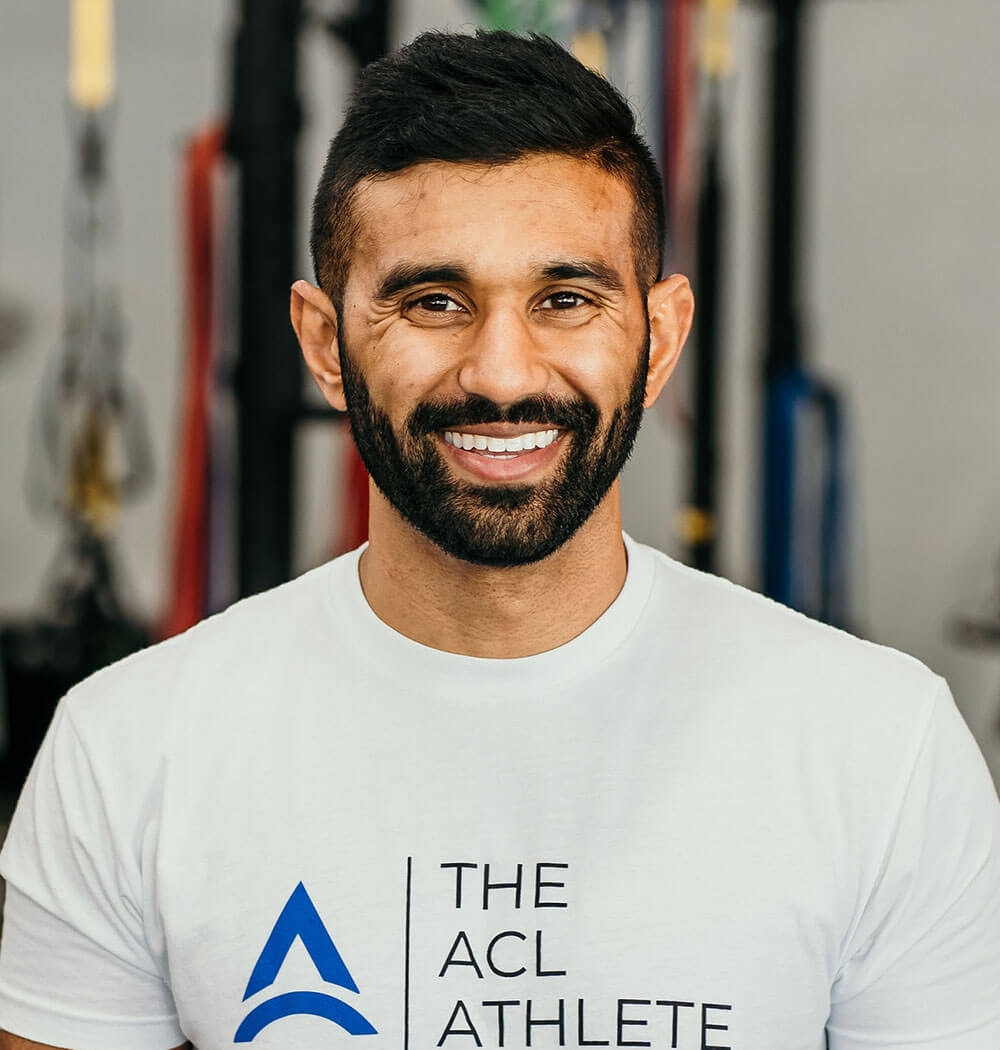
That is going to be it for today, y’all. Until next time, this is your host, Ravi Patel, signing off.
Subscribe and leave The ACL Podcast a review – this helps us spread the word and continue to reach more ACLers, healthcare professionals, and more. The goal is to redefine ACL rehab and elevate the standard of care.
Resources:
- Check out our free ebooks on our Resources page
- Sign up for The ACL Athlete – VALUE Newsletter – an exclusive newsletter packed with value – ACL advice, go-to exercises, ACL research reviews, athlete wins, frameworks we use, mindset coaching, blog articles, podcast episodes, and pre-launch access to some exciting projects we have lined up
- 1-on-1 Remote ACL Coaching – Objective testing. An individualized game plan. Endless support and guidance. From anywhere in the world.
- More podcasts? Check out our archives
Connect: