
Show Notes:
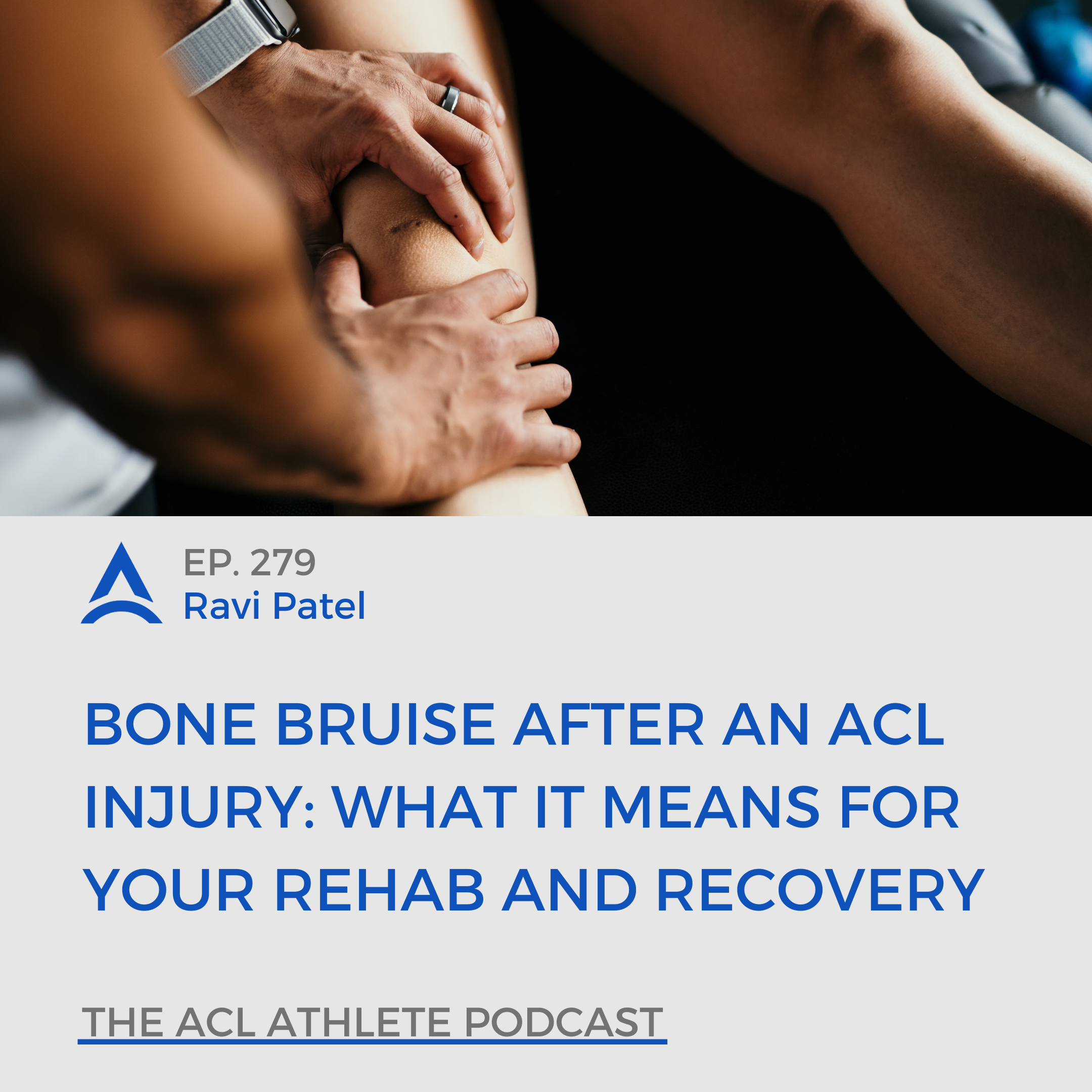
In this episode, we take a deep dive into one of the most overlooked pieces of the ACL injury: bone bruising. Present in roughly 85% of ACL tears, bone bruises are almost always mentioned in the MRI report and almost always glossed over in the clinical conversation. We break down what a bone bruise actually is at the tissue level, why the classic “kissing contusion” pattern shows up on the lateral side of the knee, and how the Costa-Paz grading system helps us understand severity. We walk through three key research findings on healing timelines, cartilage risk, and long-term outcomes. We also get into the practical rehab implications: why bone bruising is one of the strongest arguments for not rushing into surgery, how it contributes to slower swelling resolution and quad activation in prehab, what it means for early post-op loading, and how to use symptoms and criteria rather than the calendar to guide progressions. Whether you are an athlete trying to make sense of what your knee is telling you or a clinician looking to factor this into your clinical reasoning, this episode gives the bone bruise the airtime it deserves.
What is up y’all? Welcome back to another episode of the ACL Athlete Podcast. I’ve got my coffee, it’s morning, and I’m excited to talk about something that doesn’t get nearly enough attention in ACL rehab: bone bruising after an ACL injury. Here’s a scenario I hear about often. You tear your ACL, get an MRI, and your surgeon or physical therapist mentions a bone bruise somewhere in the report. Maybe they say something like, “That’s pretty common with ACL tears,” and then quickly move on to conversations about surgery timing, graft choice, and return-to-sport timelines. The bone bruise gets maybe 10 to 15 seconds of airtime before everyone moves on.
Then, over the next several weeks, you’re grinding through prehab. Your knee feels more swollen than expected, there’s more pain than you anticipated, and your quads aren’t firing the way they should. Walking still hurts more than you thought it would, yet nobody connects those dots back to the bone bruise. That’s what this episode is about. A bone bruise is not just a footnote in the ACL process; it’s part of the injury itself, and its size and location should influence how your rehab is planned and how your recovery is expected to progress.
I’m not saying a bone bruise is responsible for every setback or symptom you experience. However, it is an important piece of the puzzle. It shows up in the majority of ACL injuries, and while it rarely gets discussed, it can significantly influence rehab progress, expectations, and decision-making throughout recovery. One of the biggest reasons I believe ACLers should avoid rushing into surgery is because of what’s happening underneath the surface with bone bruising. It has its own healing timeline, and understanding that process can help explain why some athletes recover more smoothly than others.
So let’s start with what a bone bruise actually is. When you tear your ACL, your knee doesn’t just tear a ligament. The same force that tears the ACL often drives the femur and tibia into one another at high speed and under significant load. While the outer shell of the bone usually remains intact, the internal structure absorbs the impact. Think of the inside of your bone like a sponge. During an ACL injury, that sponge-like structure can become compressed and damaged, creating tiny fractures within the internal framework.
As those tiny fractures occur, bleeding develops, swelling accumulates, and cells within the area can die. That internal damage appears on MRI as what we call a bone bruise. It’s similar to a bruise on your skin in that the surface remains intact while damage occurs underneath. With a bone bruise, the outer bone remains stable while the deeper internal structures experience trauma. Another important factor is that the cartilage sitting on top of the bone often absorbs some of that impact as well. Even when cartilage appears normal during surgery, it may still have been affected by the original injury.
There are different types of bone bruises, but the most common one after an ACL injury is called an intraosseous bruise, which occurs deep within the marrow. More severe bruises can become subchondral, meaning the damage extends right up to the bone-cartilage interface. These are the bruises most associated with future cartilage concerns. One of the most fascinating aspects of bone bruising in ACL injuries is the location pattern. Approximately 85% of acute ACL tears show bone bruises on MRI. That means the vast majority of ACLers will have some degree of bone bruising after their injury.
The most common pattern occurs on the lateral side of the knee, specifically involving the lateral tibial plateau and the lateral femoral condyle. When bruising appears on both surfaces, it is referred to as a kissing contusion. This pattern reflects the injury mechanism itself. During a classic non-contact ACL injury, the knee often collapses inward while the tibia shifts forward. As the ACL tears, the lateral portions of the femur and tibia collide. The resulting bone bruise becomes a footprint of how that injury occurred.
The exact location of the bruise can even provide clues about knee position at the time of injury. More extension may create bruising toward the front of the femoral condyle, while greater knee flexion can shift the bruise farther back. Bruising on the medial side of the knee may indicate a more complex injury pattern and should prompt further investigation into structures such as the meniscus or MCL. In many ways, the bone bruise tells part of the story of how the injury happened. It gives clinicians additional information beyond simply confirming that the ACL is torn. Understanding that story can help guide both expectations and treatment decisions.
Bone bruises are also graded according to severity using the Costa-Paz classification system. Type I lesions are deeper within the bone and generally represent lower-severity injuries that tend to heal well. Type II lesions extend closer to the bone-cartilage interface and carry a moderate level of severity. Type III lesions involve disruption or depression of the bone surface itself and are considered the most severe. In long-term follow-up studies, Type III lesions have shown a much higher likelihood of cartilage thinning and structural changes over time.
For ACLers reviewing MRI reports, asking about the location and severity of a bone bruise can provide valuable context. It’s not something to obsess over, but it is worth understanding. A bone bruise is often mentioned in passing, even though it can influence how the knee feels and responds during recovery. Knowing whether the bruise is small, large, or more severe can help explain why your recovery may not look exactly like someone else’s. It can also provide insight into why certain symptoms persist longer than expected.
Now, let’s talk about what a bone bruise actually feels like. It’s different from the bruise you get after bumping into a table. Many ACLers describe a deep, aching sensation within the knee that feels like it’s coming from inside the joint itself. Pain often worsens during weight-bearing activities, especially walking, descending stairs, or anything involving impact. Swelling may linger longer than expected, and the knee can remain reactive even when other aspects of recovery seem to be improving.
This becomes complicated because ACL injuries rarely occur in isolation. There may be meniscus damage, cartilage involvement, MCL sprains, or other associated injuries contributing to symptoms. It’s often impossible to determine exactly how much of your pain or swelling comes from the bone bruise itself. However, that doesn’t mean the bone bruise should be ignored. It remains an important factor to consider, particularly when recovery feels slower or more difficult than anticipated.
This is one reason why some ACLers struggle more during prehab. Regaining extension, reducing swelling, restoring quad activation, and normalizing gait can all take longer when significant bone bruising is present. The knee is dealing with more than just a torn ligament. The underlying bone and surrounding tissues are also recovering from trauma. As a result, progress may occur at a different pace than expected. That doesn’t mean anything is wrong—it simply means the recovery process needs to account for all aspects of the injury.
The key takeaway is that the same diagnosis does not mean the same timeline. You can line up twenty ACLers with identical ACL tears on paper and see twenty different recovery experiences. One athlete may recover quickly, while another progresses more slowly due to factors such as bone bruising, injury severity, cartilage involvement, lifestyle demands, or other variables. Recovery is influenced by far more than a diagnosis alone. This is one of the reasons why rigid timelines can be so misleading in ACL rehab.
Two athletes can have identical ACL injuries, yet if one has a large bone bruise covering most of the lateral femoral condyle and the other does not, they are not going through the same recovery process. The athlete with the larger bone bruise will often experience more pain, greater swelling, increased irritability, slower walking recovery, and potentially a longer prehab timeline. Their knee simply has more healing to do. This is why comparing yourself to someone else’s recovery can be so frustrating. The injuries may look similar on paper, but the realities of the recovery process can be very different.
This brings me to one of my strongest recommendations: don’t rush into surgery. The vast majority of ACLers do not need surgery within a week or two of injury. When surgery is performed too soon, the knee is often still swollen, stiff, and recovering from the original trauma. The bone bruise itself has barely begun healing. The result is a knee that experiences two major traumatic events in rapid succession, which can make recovery more challenging.
Whenever possible, allowing four to eight weeks for prehab can make a tremendous difference. Giving the knee time to calm down, regain extension, restore strength, and reduce swelling often leads to a smoother post-operative recovery. Research continues to support the value of prehab, and clinically, we see the same pattern repeatedly. ACLers who enter surgery with a quiet knee tend to recover more successfully afterward. While there are exceptions, most people benefit from taking the time to prepare their knees before surgery. A little patience on the front end often pays dividends later.
So what does the research tell us about bone bruises? First, healing takes longer than most people realize. The median time for a bone bruise to resolve on MRI is roughly ten months, although symptoms often improve much sooner. This highlights why symptom-based and criteria-based progression is often more useful than relying solely on timelines. Just because your knee feels better does not necessarily mean the tissue has completely healed. Healing and symptom resolution are not always the same thing.
Second, bruise size matters. Research has shown that larger bone bruises are associated with a higher likelihood of cartilage damage years later. This doesn’t mean poor outcomes are inevitable, but it does mean the initial MRI provides valuable information about long-term joint health. The larger the area of impact, the greater the potential effect on the cartilage above it. Understanding this relationship helps us better appreciate the injury as a whole. It also reinforces why the details of the MRI matter.
Third, the highest risk occurs when bone bruising and cartilage damage are present together. Bone bruises alone are generally not strong predictors of poor long-term function. However, when significant cartilage injury accompanies the bruise, long-term symptoms become more likely. This is why clinicians should look beyond the ACL tear itself and evaluate the entire picture. The interaction between different structures often tells us more than any single finding alone. Context matters.
The takeaway is simple: know what you’re working with, account for it in your rehab plan, and don’t dismiss bone bruising as irrelevant. It may not be the headline injury, but it still influences recovery. Understanding its role can help explain symptoms, guide expectations, and improve decision-making throughout the process. Knowledge creates a better context, and a better context leads to better choices. That applies to both clinicians and ACLers alike.
From a rehab perspective, the implications are practical. Before surgery, restoring full extension should be a priority. Bone bruising can contribute to swelling and irritability that slow this process. Entering surgery without full extension significantly increases the risk of post-operative stiffness. This is why the condition of the knee matters more than simply reaching a particular date on the calendar. A quiet knee should always be the goal before heading into surgery.
After surgery, weight-bearing is usually appropriate unless other procedures require restrictions. However, ACLers with significant bone bruising may experience slower normalization of swelling, pain, and quad activation. Progression should be guided by symptoms and objective criteria, not by the calendar alone. Every knee responds differently, and those responses should influence decision-making. The knee itself provides valuable feedback if we are willing to listen.
This becomes especially important when introducing running, plyometrics, and impact activities. Rather than rushing because a protocol says it’s time, the knee should demonstrate that it’s ready. Strength, movement quality, swelling response, pain levels, and overall tolerance should drive progression. The goal is not simply to check boxes. The goal is to build a resilient knee that can tolerate the demands of sport and activity. Criteria should always take priority over arbitrary timelines.
For return to sport, the good news is that bone bruises generally do not predict whether someone returns successfully. Studies have shown that bruise size alone does not significantly influence return-to-sport rates, functional outcomes, or graft failure rates. Most ACLers still return to the activities they love. The standard return-to-sport criteria remain the same. Strength, symmetry, psychological readiness, movement quality, and adequate time from surgery still matter most. Those benchmarks remain the foundation of sound decision-making.
Where bone bruising matters is in the gray areas. If an athlete is technically meeting criteria but still demonstrates excessive reactivity, swelling, or soreness, significant bone bruising may justify a more conservative approach. It doesn’t necessarily prevent progression, but it may influence the pace of progression. This is where clinical judgment becomes important. Not every decision can be made by a checklist alone. Sometimes the athlete’s presentation tells us more than the numbers.
For clinicians and coaches, pay attention to the location, size, and severity of the bruise. Use it to help explain symptoms, guide expectations, inform surgical timing discussions, and support sound clinical decision-making.
For ACLers, understand that a bone bruise is part of the injury. It’s not a death sentence, and it’s not something to fear. Most bone bruises heal, most athletes recover well, and most ACLers return to the activities they love. The important thing is understanding where it fits into the larger recovery picture.
If things are progressing more slowly than expected, don’t immediately assume you’re doing something wrong. Stay focused on the process, follow your plan, communicate with your providers, and keep moving forward. Know what you’re dealing with, ask the right questions, and trust the process. Healing is rarely perfectly linear, especially after an ACL injury. Progress often comes in waves rather than straight lines. As long as you continue moving in the right direction, you’re on the right path.
But that’s the episode, and I hope that this was helpful for you guys. Again, a long one, but this was more of a deep dive into bone bruising. If you need any support, help, or have questions, you can find all of our information in the show notes. Otherwise, I will catch you in the next episode. This is your host, Ravi Patel, signing off.
Subscribe and leave The ACL Podcast a review – this helps us spread the word and continue to reach more ACLers, healthcare professionals, and more. The goal is to redefine ACL rehab and elevate the standard of care.
Resources:
- Check out our free ebooks on our Resources page
- Sign up for The ACL Athlete – VALUE Newsletter – an exclusive newsletter packed with value – ACL advice, go-to exercises, ACL research reviews, athlete wins, frameworks we use, mindset coaching, blog articles, podcast episodes, and pre-launch access to some exciting projects we have lined up
- 1-on-1 Remote ACL Coaching – Objective testing. An individualized game plan. Endless support and guidance. From anywhere in the world.
- More podcasts? Check out our archives
Connect: